
3 Things I Wish I Knew Before Reading The Master and Margarita
 Sara · November 17, 2026
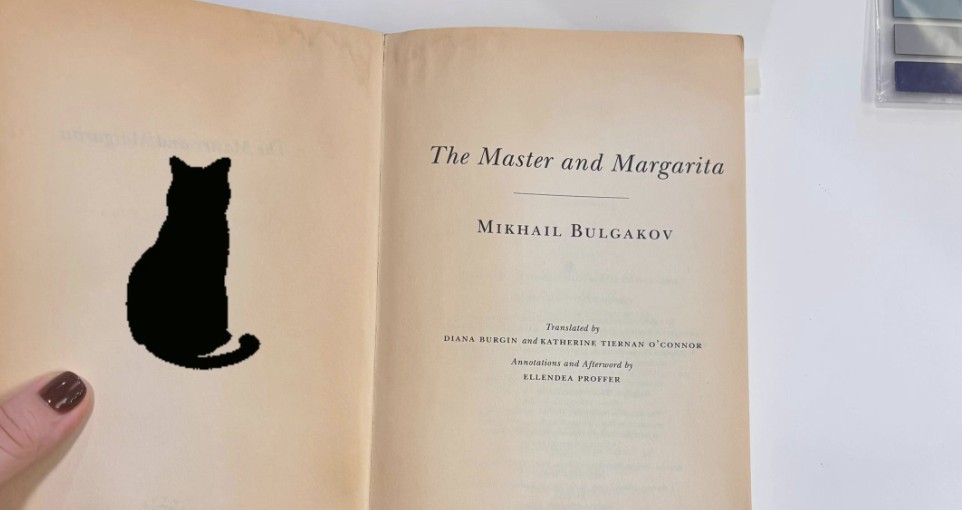
The Master and Margarita is one of those books people tell you to read “at least once in your life.” However, you open it and within a few pages a man loses his head under a tram, you must accept the presence of a giant talking cat, and the plot throws you into dialogue that feels dense but you have no bearings or context at all.
If you’ve started it and felt lost, that is everyone’s experience and it is, in my opinion, deliberate. Here are three things that would have made my first reading a lot easier that I wish to put out there.
1. It’s not going to make sense at the beginning (and that’s ok)
Reasons that add to the confusion:
- Multiple plots run side by side and it’s not clear how they connect or if they should at some point.
- The narrative style differs.
- There’s no single main character to hold on to.
- The title promises the Master and Margarita and you’re trying to figure out who they are or if you’ve already met them.
- Wild satirical fantasy, full of grotesque comedy, alternates with a serious historical story set in the time of the Bible.
This confusion is frustrating, but this is what made me think it was actually deliberate.
→ Bulgakov wrote the novel in Stalin’s Soviet Union, between 1928 and his death in 1940, at a time when writers were watched and censored. The book wasn’t published until the 1960s, and even then in a censored version. Writers were not allowed to be free, speak their truth and be themselves – and isn’t that the crucial part of a writer’s calling?
The book is confusing, and this makes it possible for him to actually slip his critiques under the radar. The fact that we are disoriented is truly an extended effect of the chaos that was 1930s Soviet Russia: isn’t it interesting to consider that that disorientation was a condition for the truth to be spoken?
2. There are two worlds (two main plotlines), and they’re connected by the theme of cowardice
The novel moves between two settings:
- 1930s Moscow. The Devil arrives with his entourage (including Behemoth, the enormous black cat). They expose the hypocrisy of the Soviet writers and bureaucrats, people who have built their careers on saying exactly what they’re supposed to say.
- Ancient Yershalaim (Jerusalem). Pontius Pilate is faced with a decision about an innocent man, and he knows the man is innocent.
At first these two stories seem to have nothing to do with each other. But look closer and they’re asking the same question: what is the cost of not listening to one’s conscience?
Pilate condemns a man he wants to save because he’s afraid of what it will cost him. The writers in Moscow betray what they know is true because they’re afraid of losing their place.
Bulgakov names cowardice as one of the worst vices of all, and both worlds are full of it.
3. In a world of imposed conformity, evil is actually good, because it makes goodness visible again
Stalinist Moscow presents itself as rational, orderly and ideologically pure. Everyone is expected to think alike, speak alike, and deny anything that doesn’t fit the official version of reality. There is no God, there is no Devil, and there’s no soul.
The novel opens with a line from Goethe’s Faust, where Mephistopheles calls himself “part of that power which eternally wills evil and eternally works good.”
When every moral distinction has been flattened, when nobody can tell the difference between right and wrong anymore, the only way goodness can become visible again is through the arrival of the Devil.
Woland’s work is to expose the hypocrisy and the lies in the Soviet project of security and peace. This “reverse purification” allows for the unexpected to happen, and therefore for truth to be exposed with just as much force.
What are your thoughts on the novel?
Have you read it? Did it make sense to you the first time, or did it take a second read? Let me know in the comments, I’d love to hear from you.
See the carousel on TikTok: @sara_sorensen
New to the classics? Download my free guide, How to read a classic, and find The Master and Margarita blog posts and resources in my Browse the Classics Library.
Compare and Contrast Graphic Organizers for literature, movies, podcasts and art: the comparative method, ready for your next lesson.
Download here