

How This Resource Enhances Learning
 Deepens Literary Analysis – Students refine their ability to track character motivations, identify major themes, and analyze Shakespeare’s techniques.
 Improves Essay Writing – By engaging in Macbeth in Macbeth character analysis, students develop stronger, more insightful literary essays.
 Encourages Critical Thinking – Students explore key questions. Eg. Is Macbeth truly responsible for his downfall or do fate and external influences manipulate him?
 Makes Shakespeare Accessible – The structured, visual approach helps students feel less intimidated by Shakespearean language and themes.
Who Can Benefit from This Resource?
 High School English Teachers. Firstly, this is a valuable tool for guiding students through a thorough Macbeth study guide while keeping lessons interactive.
Shakespeare Enthusiasts and College Students. Do you love literature and appreciate reading guides? Or are you a college student and want a structured resource to use as an annotation tool? This resource is great to support your reading of the play.
 Essay-Writing Prep. Thirdly, if your students struggle with structuring literary essays, analyzing the inner world of Macbeth happens naturally as they fill out the worksheets. Students will be less tempted to search elsewhere to answer essay questions because they are the ones doing the foundational work.
Conclusion
If you’re looking for a Macbeth study guide that helps students engage with Macbeth’s character transformation, this resource is a great addition to your Shakespeare unit.
As all literature teachers know, teaching Macbeth goes beyond the plot— the play offers insights about human ambition, fate, and moral choices. With this tool students will track his downfall in a meaningful way while strengthening their critical thinking and essay-writing skills.
 Download the resource here!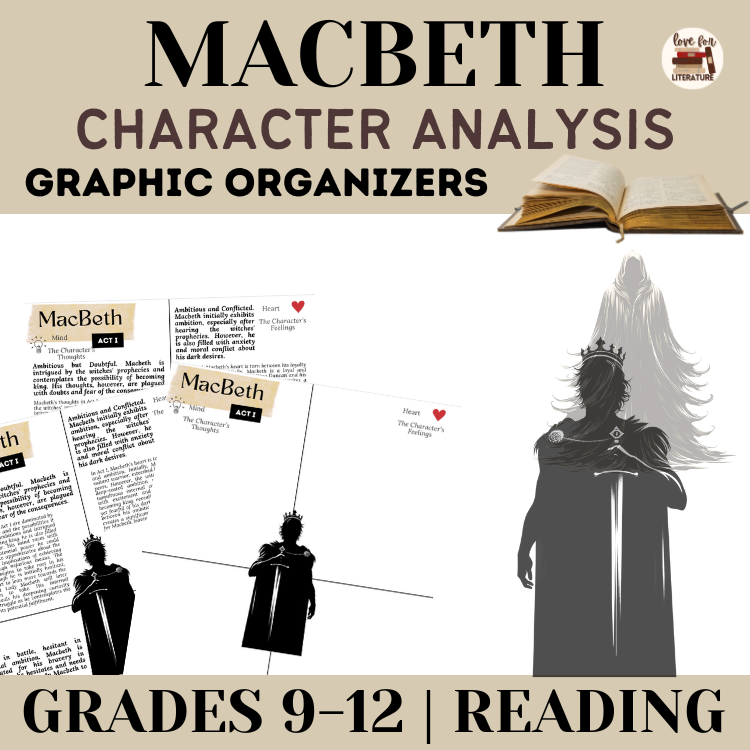
 Previous Post
 Next Post
[…] Macbeth in Macbeth: Character Analysis – Track another tragic fall with graphic organizers […]
[…] looking to take your Macbeth unit even further, don’t miss our in-depth character guide “Macbeth in Macbeth: Character Analysis”, where we break down his psychological transformation scene by scene. For poetry lovers or those […]