In most cases, it is pressure of perfectionism, audience and length that stall the process.
An experienced writer knows they can’t tackle all at once, but a beginner writer collapses before they even begin.
So, where to start to teach the stages of the writing process? Teachers need two things:
Clear instructions
Clear scaffolding
Keep reading to have all you need to know to set your students up for success!
Step 1: The First Stage of the Writing Process - Brainstorm to discover
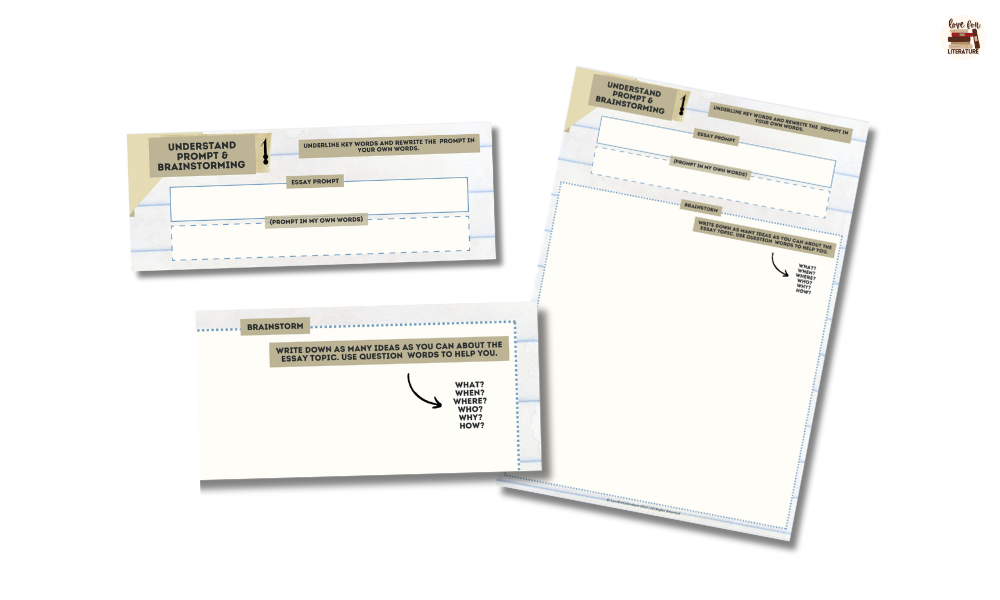
The brainstorming stage is where students uncover their ideas. Just like Flannery O’Connor says, writing is as a form of discovery.
Students must see this as an exploratoryprocess!
Students often skip brainstorming, seeing it as unnecessary. But without this step, their ideas will feel disconnected and risk being surface-level.
We need to encourage them to think of brainstorming as throwing paint on a wall—some ideas will stick, and others won’t. The point is to discover what’s worth exploring.
Common Mistakes
Fear of bad ideas: Students may hesitate to jot down “bad” ideas, not realizing even the worst ideas can spark something great.
Overthinking: They might try to organize too soon, skipping the free-flowing creativity that brainstorming demands.
I believe that learning how to brainstorm is actually a skill!
Teach them to build mind maps and idea webs in the classroom.
Modeling brainstorming with them in class is much more beneficial than we think! Get them to record all ideas on a special page, give this space as much dignity as you can.
This stage is actually about quantity, not quality.
All ideas are valid!
Step 2: Plan to Clarify - Planning in the Writing Process
Once the brainstorming ideas are on paper, students move to the planning phase.
Planning is where imagination needs to meet logic and clarity.
Why It’s Important
Planning creates a roadmap for the essay.
Without it, students risk producing unfocused or illogical arguments.
Students must select and arrange ideas into a coherent structure.
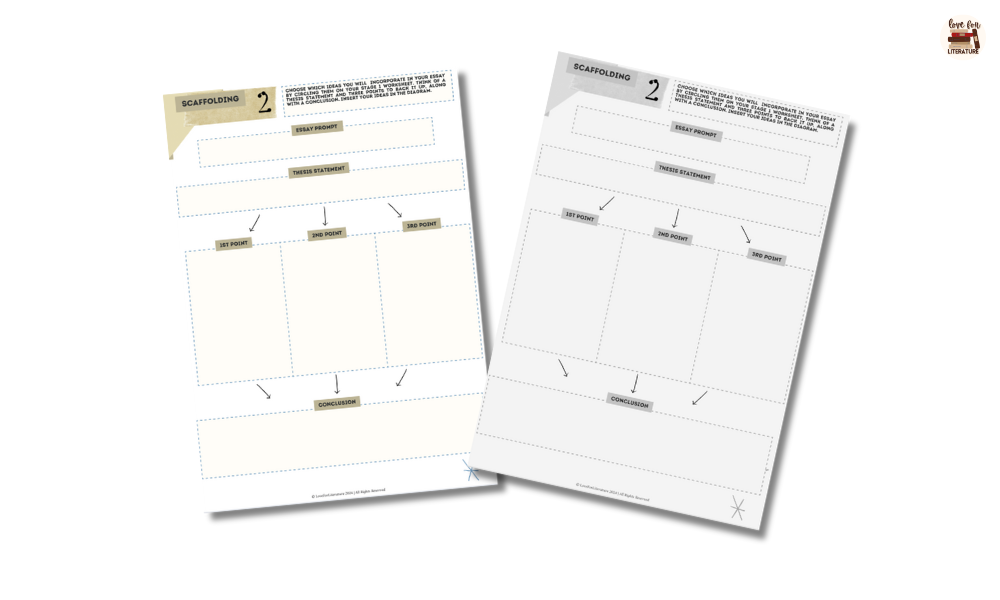
Graphic organizers such as essay outlines, flowcharts, or cause-and-effect charts can help with this.
Common Mistakes
Skipping organization: Many students leap straight to drafting without creating a plan, resulting in chaotic writing.
Overloading: They often try to include every idea from brainstorming, even if it doesn’t fit.
Solution
Model the process with a simple essay outline. Use graphic organizers like the ones above!
Challenge students to justify their choices by asking questions like:
Why did you choose this point to start with?
How does this lead to the next idea?
Could this section be clearer if placed elsewhere?
Here we need to remind students to be selective, ensuring their plan conveys their argument as logically and effectively as possible.
They’re planning a roadmap and taking the reader on a journey: they need to feel like they are in control and their arguments follow a logical structure.
Step 3: Draft to Refine – The Most Important Stage of the Writing Process
The first draft isn’t the final product—it’s the foundation. As Hemingway reminds us, writing is rewriting.
Why It’s Important
Students often want their first draft to be perfect, but this mindset can paralyze progress.
They need to view this step as part of a larger process where mistakes are expected and revising is key.
Even if they’re stuck, they need to start writing.
Common Mistakes
One-and-done thinking: Many students write a single draft and submit it without rereading. So common with my students…
Avoiding self-editing: Fear of mistakes leads to reluctance in rereading their work.
Solution
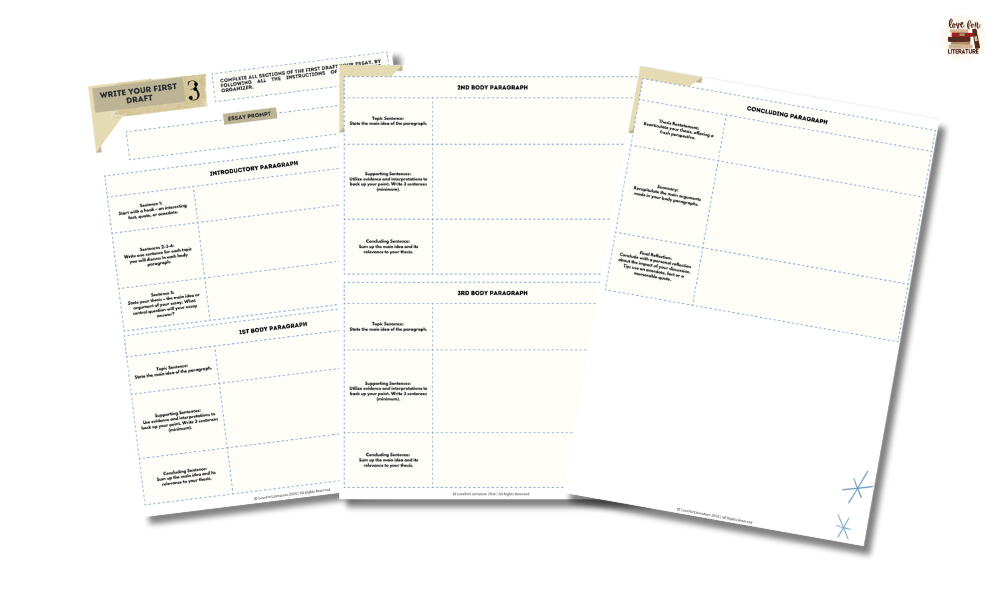
Graphic organizers and self-editing guides (see above!) that break down each part of the paragraph structure can help students focus more on the ideas, as structure is “taken care of”.
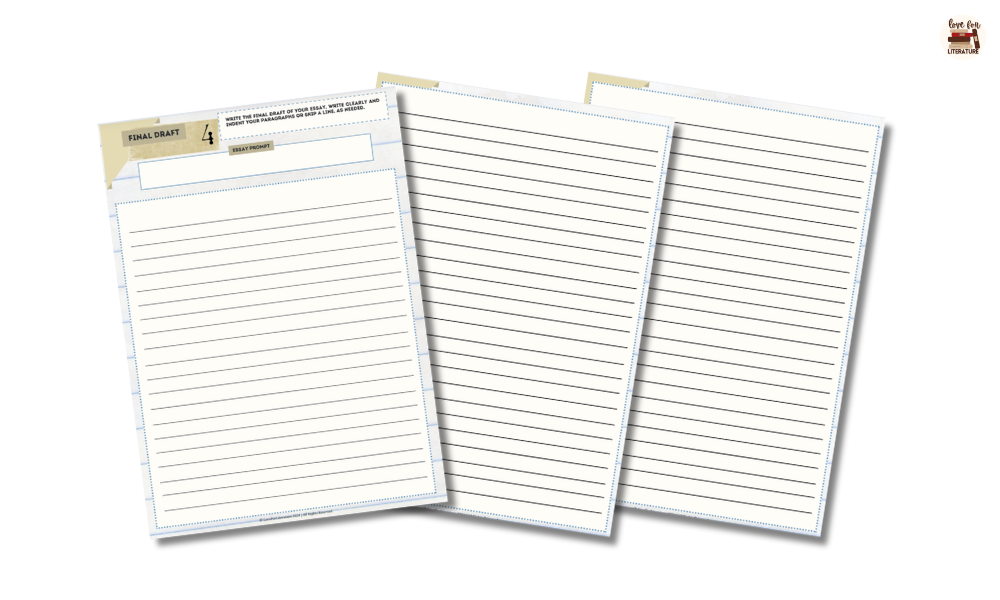
Step 4: Finalize to Polish - Revising and Editing in the Writing Process
The final draft is the culmination of a student’s work, where they polish and refine their ideas.
Students may experience bursts of inspiration during this phase, but they need to balance creativity with discipline and the carefully created plan they’ve crafted in the planning stage.
Deviating wildly from their plan can be tempting at this stage if they have that last-minute stroke of genius, but it can derail the essay completely!
Common Mistakes
Over-editing: Students may try to rewrite entire sections, losing focus and run out of time.
Last-minute inspiration overload: They may attempt to integrate a new idea without ensuring it fits logically.
Solution
Alwaysemphasize the importance of rereading drafts.
I usually try to encourage students to compare their final draft with their original plan and learn to assess themselves whether the last-minute inspiration can be carved into the existing plan.
They might not be able to express the new idea completely, but they can fit it in someway, as long as they don’t jeopardize their time management and their overall structure.
Some creative students find it difficult to channel their ideas into a standard structure, but in some cases, less is more!
Disorganized, highly creative essays are always less successful than organized (and less creative) work!
Putting It All Into Practice
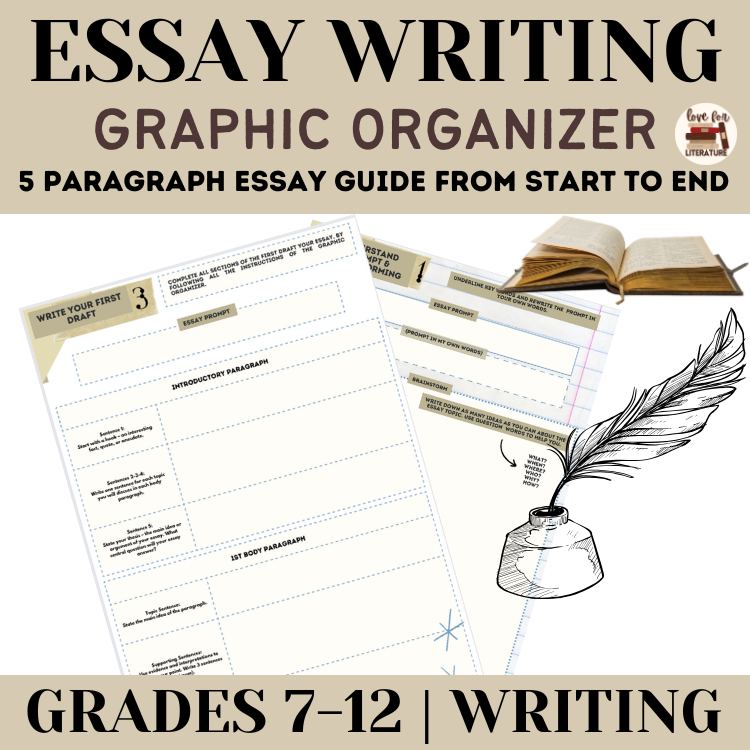
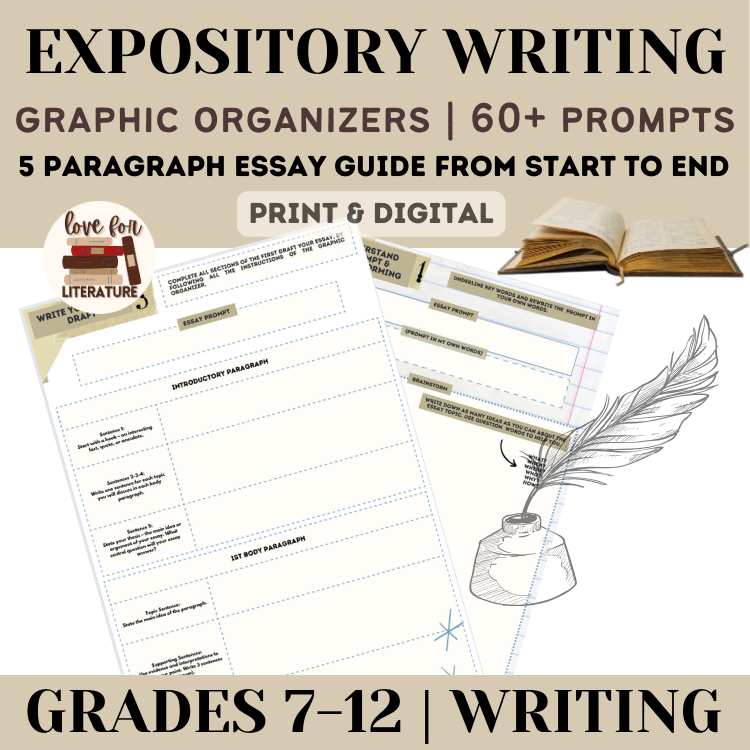
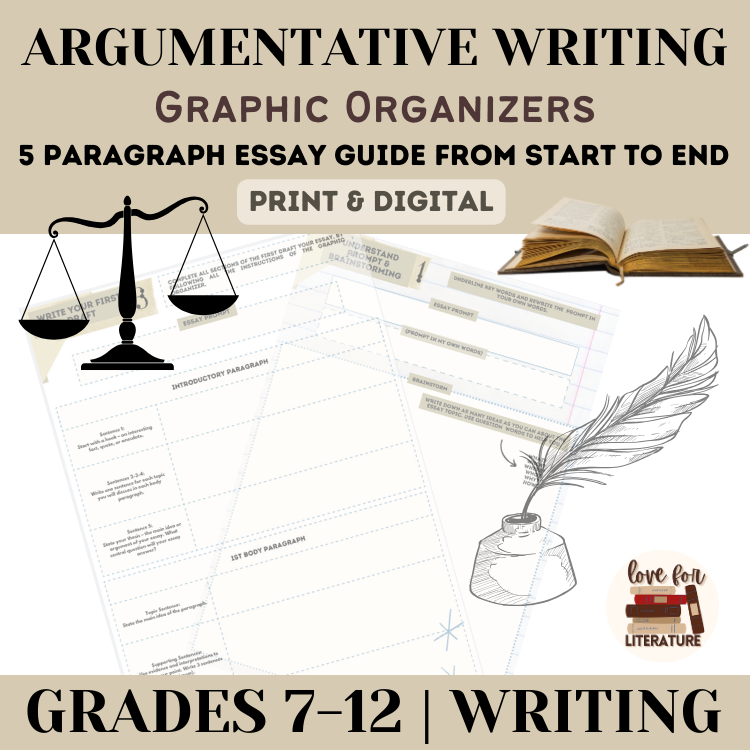
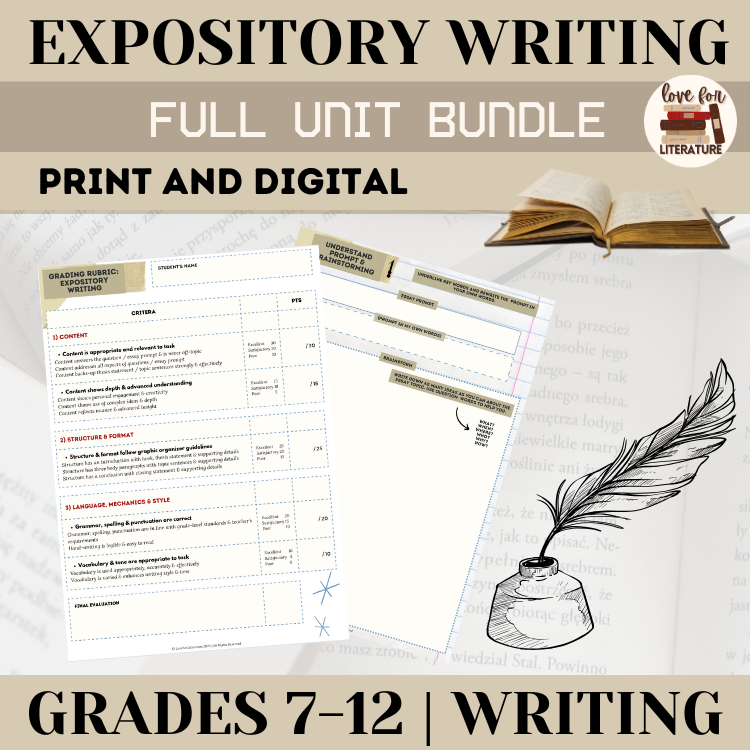
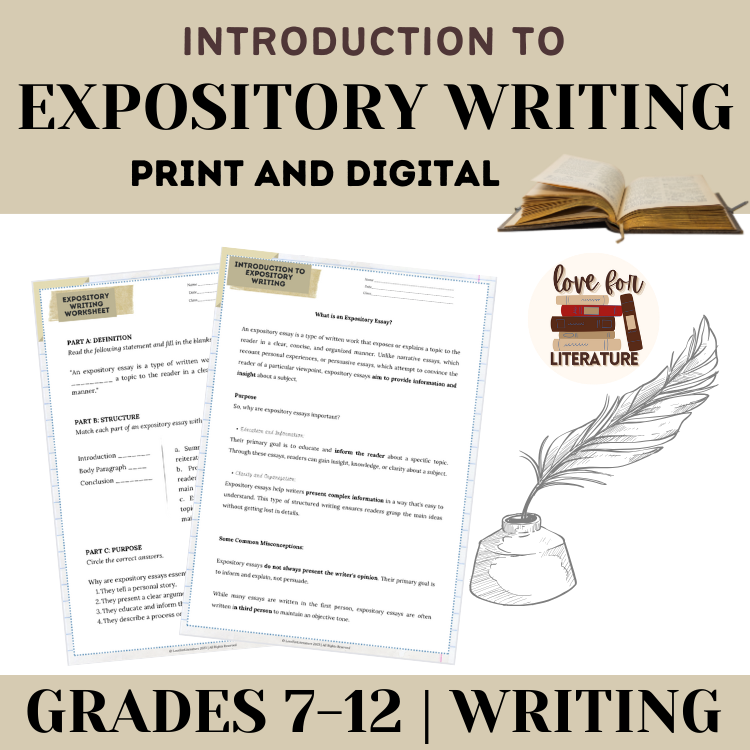
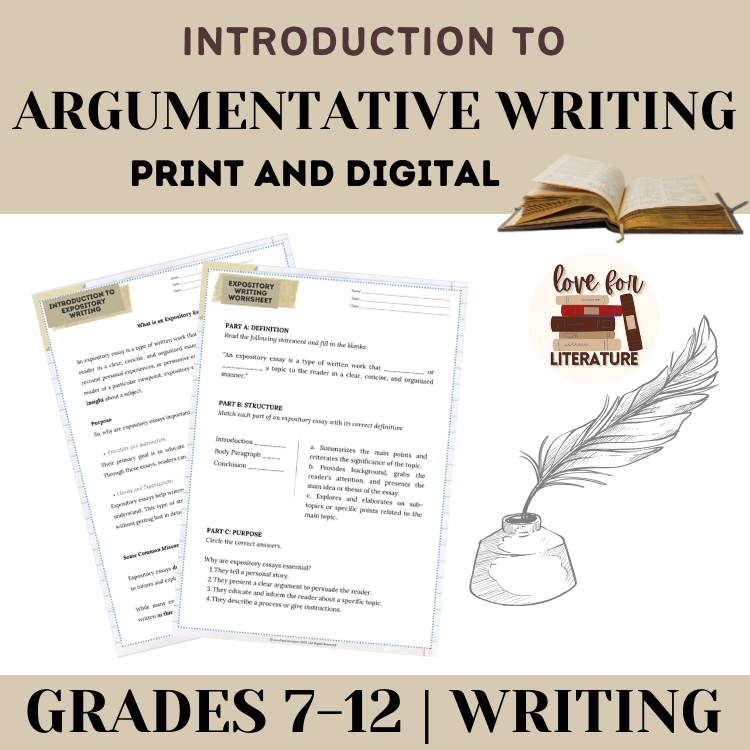
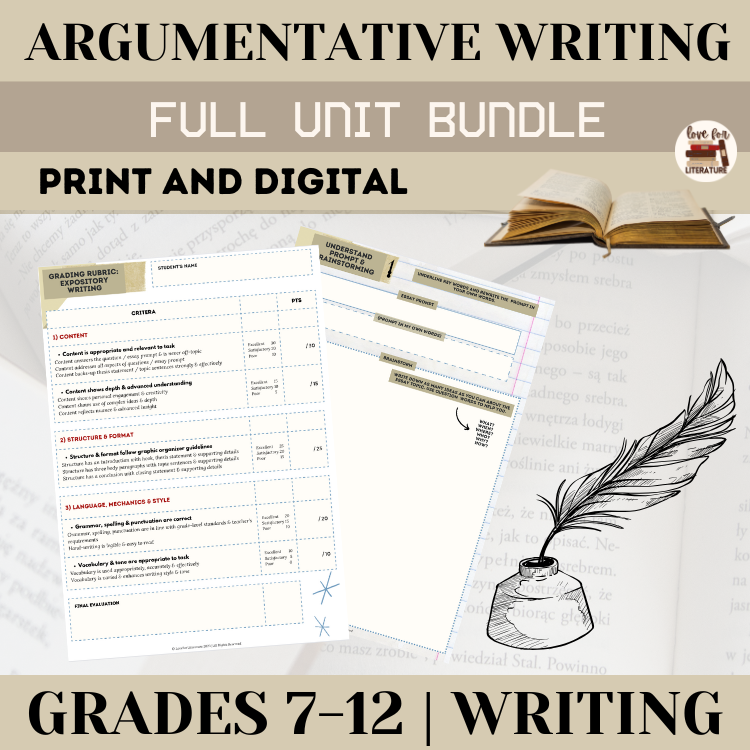
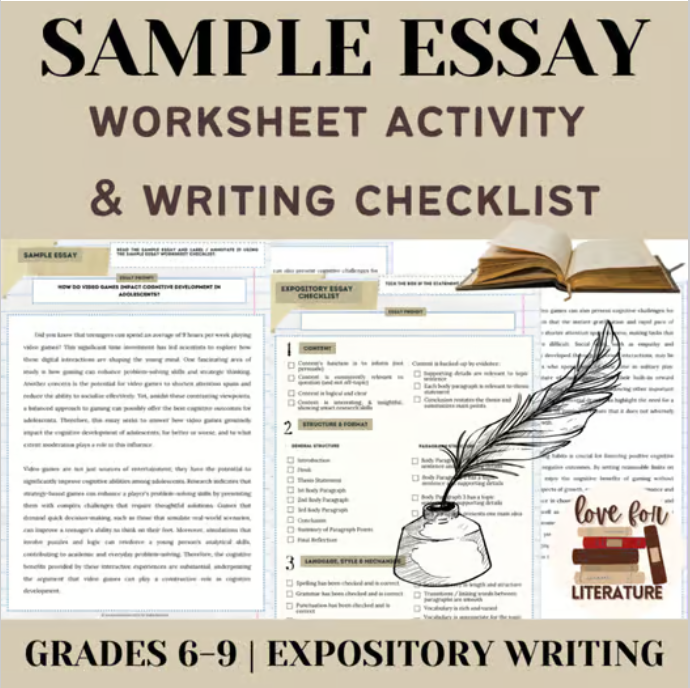
If you’re interested in a step-by-step guide that perfectly outlines the four stages of the writing process, check out my graphic organizers and other resources by clicking the icons.
The bundles below can be used for teaching expository essay writing, informational essay writing and argumentative essay writing.
The best part: all the prep work is done!
Just print or post and enjoy the time with your students as you guide them along their essay writing.
Conclusion
Having a roadmap to fall back on with a 5 paragraph structure is the best way to teach your students essay writing, whether it’s argumentative, expository or informational.
✅ Brainstorming – Writing begins with discovery. Encourage students to generate ideas freely before organizing their thoughts.
✅ Planning – Structure is key! Outlining helps students clarify their main points and organize their arguments effectively.
✅ Drafting – The first draft is about getting ideas down on paper. Remind students that writing is a process, and perfection isn’t the goal—yet!
✅ Revising & Editing – Great writing comes from revision. Encourage students to refine their work by improving clarity, structure, and grammar.
By guiding students through these stages, you help them develop confidence and skills that make writing less overwhelming and more rewarding.
Using graphic organizers at each stage provides structure, making the writing process more visual, organized, and accessible for all learners.







 Next Post
[…] How to Teach Essay Writing with Graphic Organizers – A comprehensive guide to using graphic organizers for every stage of the writing process. […]
[…] How to Teach Essay Writing: Guiding Students Through the Writing Process with Graphic Organizers […]