Chat-GPT seems to be getting the upper hand when it comes to teaching writing. The load has become even more stressful for us – not only are we competing for attention with chatbots, but the whole system feels rigged in favour of shortcuts and automating skills that need to be carried out by the student the way it used to be. The pressure we’re facing as teachers is huge and we need to acknowledge that we are not being supported enough by institutions and parents to face these challenges.
Our area of action is the classroom and this is where we can make a difference. First of all, I always try to get my students to understand that taking shortcuts is never a good idea. It’s setting them up for more competition in the future – in a world where everyone has AI at their fingertips, what will they bring to the table if what they can produce is worse than Claude and Quillbot?
It can also be easy if done right with the right tools from the beginning.
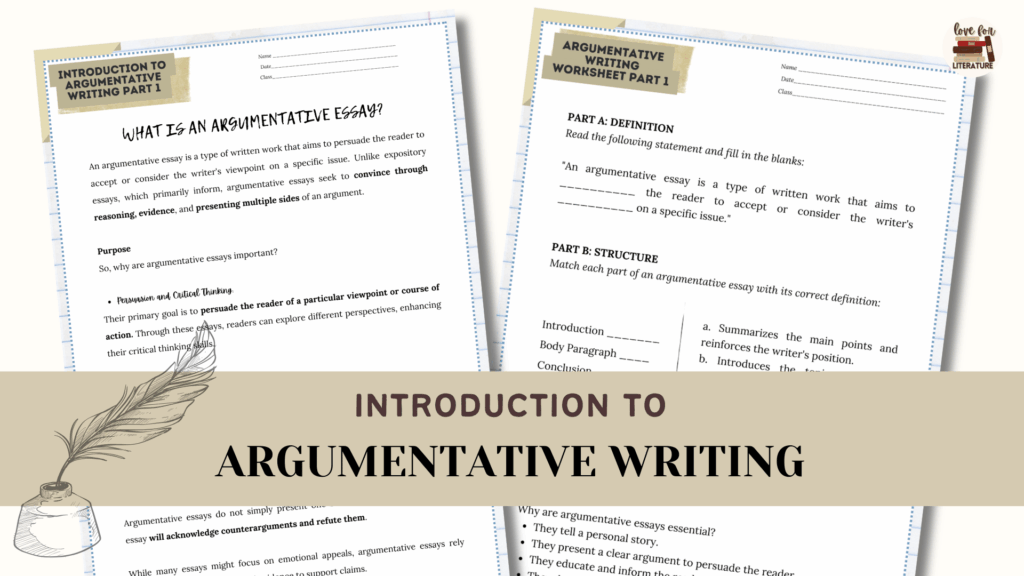
Introduction to Argumentative Writing: The ABCs
Structure, structure, structure.
Faced with any task, a student is always asking themselves these two questions:
What is expected of me?
Can I do this?
Students need to be given the tools to carry out the tasks in the way we want them to.
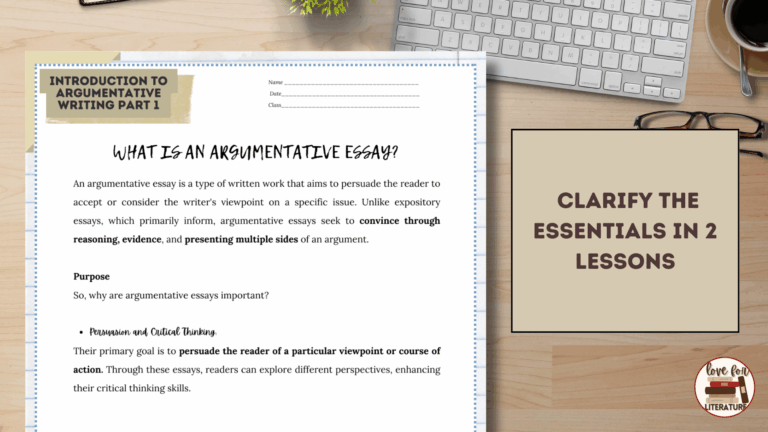
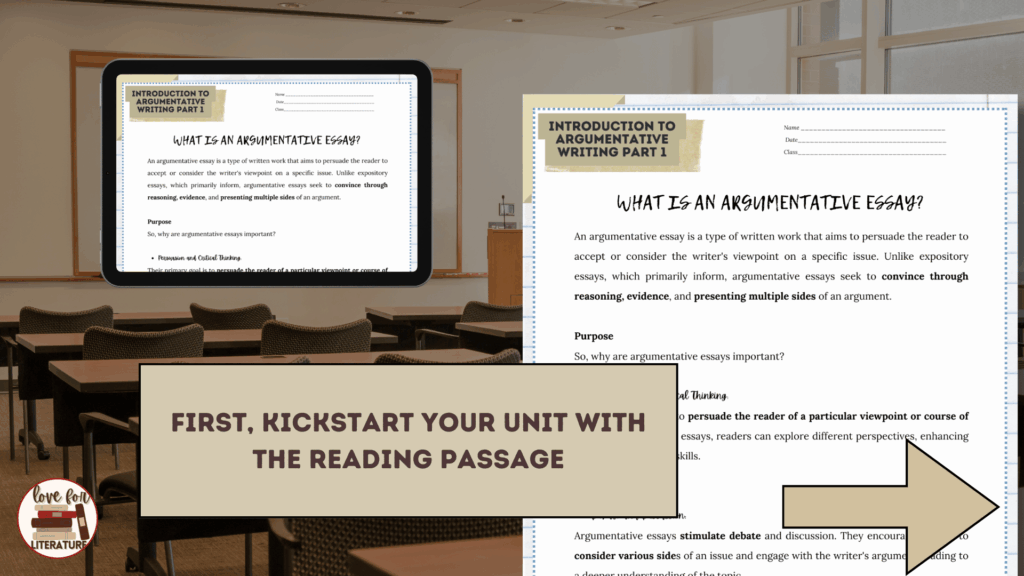
Structured writing starts with knowing what an argumentative piece of writing is.
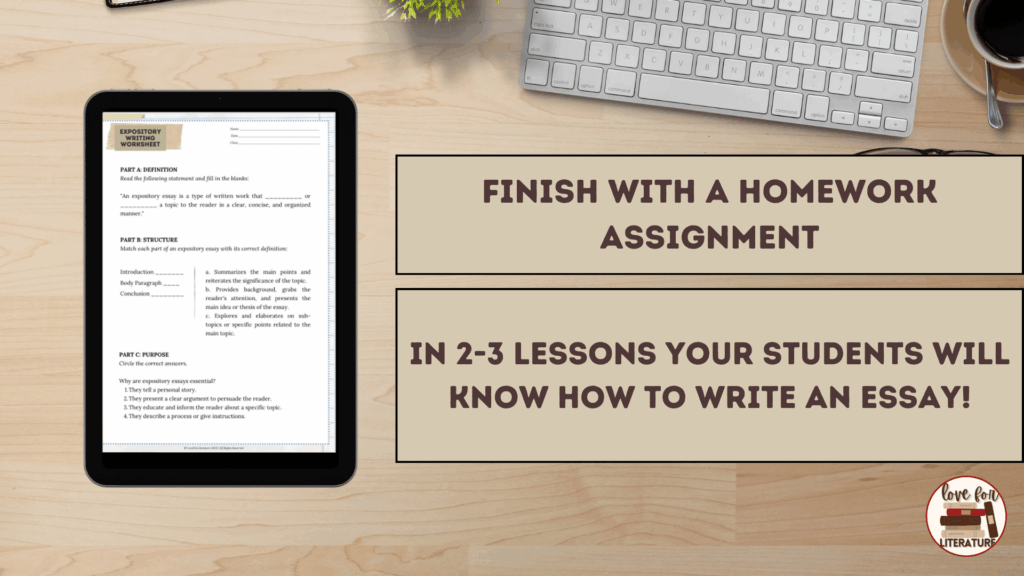
Can they distinguish it from an expository or informational essay?
What is its purpose?
In what context does this type of writing exist?
Once we have given them the theory, we can move towards action and modelling writing.
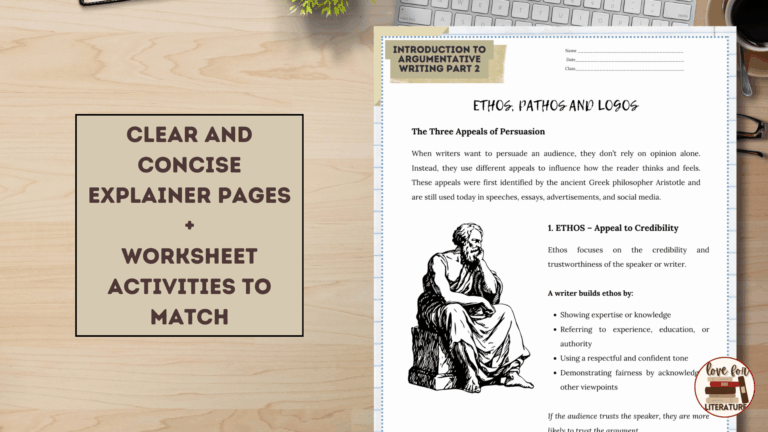
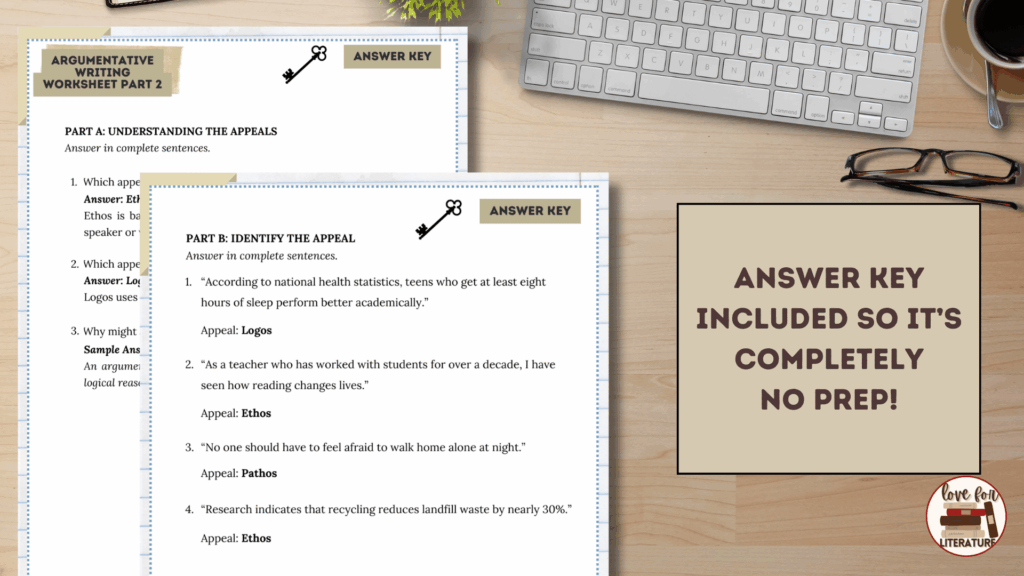
Ethos, Pathos and Logos Worksheet
Aristotle’s three principles of persuasion are the next piece of theory students must be presented with.
1. Ethos – Appeal to Credibility
Ethos appeals to the reader by establishing the writer’s credibility or trustworthiness.
“As a teacher who has worked with middle school students for over ten years, I have seen how clear structure improves writing.”
“According to the World Health Organization, regular physical activity is essential for long-term health.”
“As a scientist who has studied climate change for decades, I can confidently say that human activity plays a major role.”
2. Pathos – Appeal to Emotion
Pathos appeals to the reader’s emotions to create a personal connection to the argument.
“Imagine struggling to focus in class every day because you didn’t get enough sleep the night before.”
“No child should feel invisible or unheard in their own classroom.”
“Think about how frustrating it feels when your hard work goes unnoticed.”
3. Logos – Appeal to Logic and Reason
Logos appeals to logic by using facts, evidence, and clear reasoning.
“Studies show that students who read daily score higher on vocabulary and comprehension tests.”
“If school days are longer and students are more tired, their ability to concentrate will decrease.”
“Recycling reduces landfill waste and lowers pollution, which benefits both the environment and public health.”
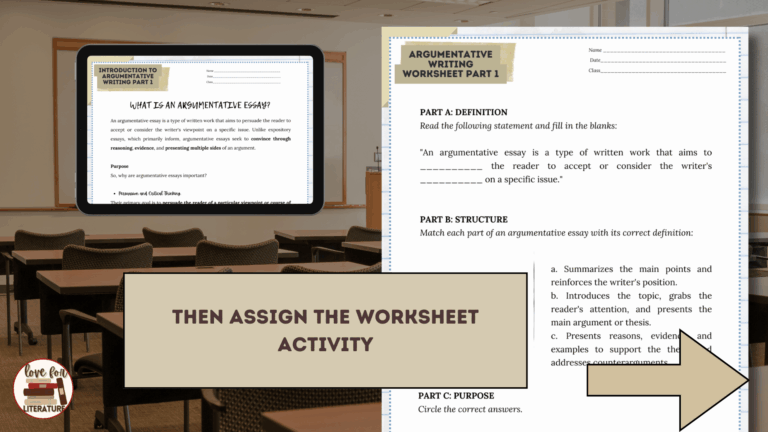
Time to Test Comprehension: Argumentative Writing Worksheet Activity
Once you have explained the basic concepts (use these reading passages if you want a printable solution to go), now it’s time to put their knowledge to the test.
Can they say what the purpose of a persuasive essay is?
Can they identify the structure?
Do they know how to recognize ethos, pathos and logos?
Can they make examples of ethos, pathos and logos of their own?
Ask them to give examples of the three appeals of persuasion – this is great practice! They will always need to include all three in their persuasive writing from now on.
And of course, strong arguments work best when credibility, emotion, and reason are used together.
What's Next? How to Continue Your Argumentative Writing Unit
Once the foundation has been set, students can start writing.
Four things I recommend using:
engaging writing prompts – giving students the option to choose is a good strategy. Take a look at these from my bundle or make up your own!
Model writing a persuasive essay in class together first, always. This makes it easy for them to understand what is expected of them and is also easy to prep.
Use graphic organizers to outline each stage of the writing process – take a look at mine or use your own! Make sure they cover each phase thoroughly, that way students are guided the whole way.
Show students an example of your rubric before you give them any assignment. It may seem counterproductive, but I can assure you that the more information they have, the better! Also, if you need a rubric or don’t have one, click here for a Common Core standards-aligned version.
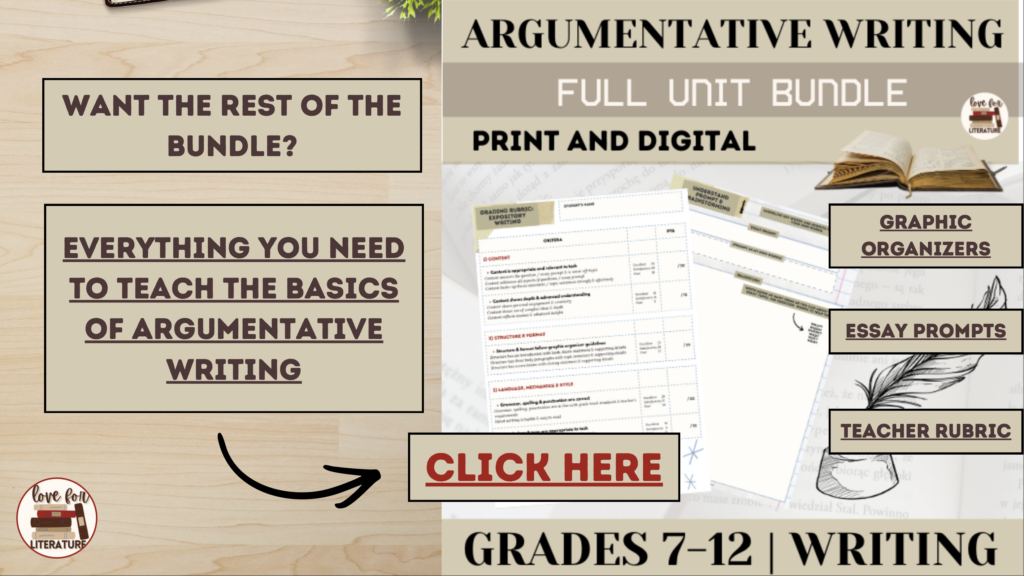
Want a Ready-to-Go Bundle to Use Tomorrow?
If you want a print and go solution to use tomorrow in class, this bundle covers a whole month’s worth of curriculum: Argumentative Writing Essay Bundle.
If you’re looking for something you don’t need to prep but that gives your students enough scaffolding and structure to carry you through a whole unit, you will find everything you need in this bundle.
What’s Included:
1. Introduction to Argumentative Writing Worksheets
Visual handouts, structured practice exercises, and a complete answer key to help students refine their skills.
Comprehensive alignment with Common Core standards, ensuring academic relevance.
2. Argumentative Essay Writing Prompts & Rubric
60+ engaging, grade-level specific prompts for grades 7-12.
Clear, easy-to-use grading rubric for teacher evaluation, self-assessment, and peer feedback.
Encourages critical thinking, debate, and thoughtful writing across all topics and skill levels.
3. Argumentative Writing Graphic Organizers
A step-by-step organizer that guides students through the writing process from brainstorming to final draft.
Includes tools to structure arguments, develop counterpoints, and create cohesive essays.
Flexible enough for any topic, these organizers simplify complex tasks for students of all abilities.
Introduction to Argumentative Writing Video Preview: Watch Now!
If you’re looking for a no-prep solution to implement everything covered in this blog post, take a look at this video preview!