

Character analysis graphic organizers are one of my favourite ways to get students engaged with a novel.
After all, as the great Ernest Hemingway reminds us: “when writing a novel, a writer should create living people; people, not characters”. If this is true for authors, it is also true for readers.
Authors treat their characters as if they know them as real people and this allows us to relate to them so closely and viscerally. In a recent interview about her creative writing process, JK Rowling has said “I really know my characters, we have an understanding. They don’t misbehave and I don’t put them through too much hell.” [Youtube: On Writing Part One JK Rowling interview].
So what does this have to do with character analysis?
Since characters are the most human aspect of a plotline, teaching character analysis can be a great opportunity to get students talking about literary concepts and ideas in a way that is meaningful and not just “technical”. Intentional and well-planned character analysis graphic organizers can help students engage more with any novel and produce better and more structured essays.
Character Analysis Graphic Organizers Can Help Students Make More Connections
Naturally, discussing characters and their life stories encourages students to employ empathy and draw connections to their own lives, often subconsciously, and paves the way for more engaging class discussions.

How do we get students to engage with the caracters on a deeper level, as if they were “real people”?
Character analysis graphic organizers that are intentional and not surface-level can help you do this.
Stage 1 - Get Students to Analyze the Character
First and foremost, creating living, breathing characters requires delving deeply into their minds, hearts, and roots.
Students should take detailed notes as they read, focusing on evidence from the text that illuminates the character’s personality and choices.
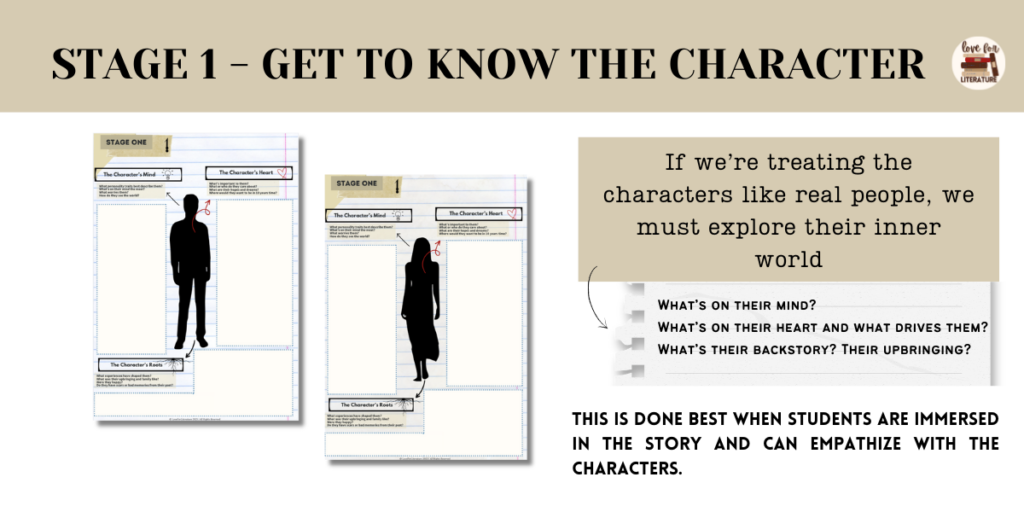
By encouraging them to explore why characters act the way they do, they begin to see characters not as static words on a page but as dynamic individuals with depth and complexity.
Stage 2 - Get Students to Create a Character Profile
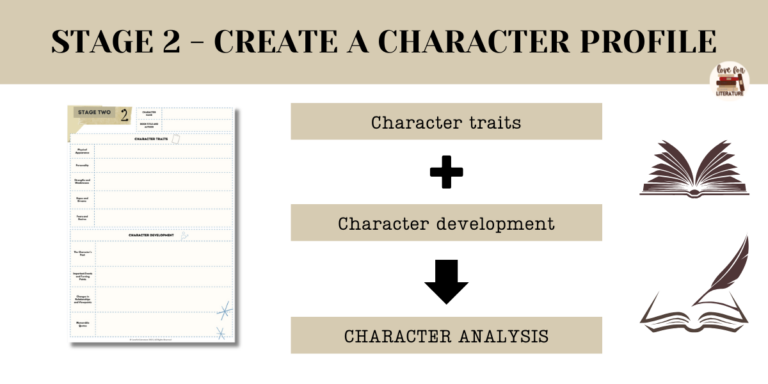
Once students have built a solid foundation of understanding, they can move to the next stage: crafting a detailed character profile.
This involves rewriting and reformulating their notes from Stage 1 to create a clear, organized portrait of the character.
The profile should delve into the character’s traits, motivations, relationships, and how they evolve throughout the narrative.
For instance, consider a character like Atticus Finch from To Kill a Mockingbird. What drives him to defend Tom Robinson despite knowing the backlash he’ll face? What does this reveal about his values?
The worksheets help students come to the conclusions themselves, as they gather evidence through their reading. With the right evidence, students connect more with the story and are more equipped to answer broader questions about the novel, tackling themes like moral justice, truth and human courage.
Where to Find Intentional Character Analysis Graphic Organizers
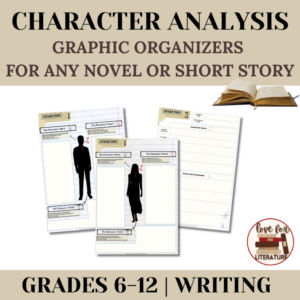
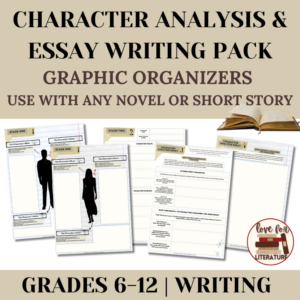
If you’re teaching character analysis with your middle or high school students, check out the preview here: Character Analysis using Graphic Organizers for Any Novel or Short Story.
What's Next? Transform Analysis into Character Essay Writing
For teachers looking to take character exploration even further, consider integrating writing assignments or essays that challenge students to argue for or against a character’s actions or decisions.
Once students have deeply analyzed a character, the next great challenge is to propose they present their insights and analysis into well-structured essays.
Writing about literature requires clear organization, strong thesis statements, and well-supported arguments—essay writing graphic organizers specific for the task are a great way to end a novel study unit or character study!
If this could be useful in your classroom, be sure to check out my Character Analysis and Essay Writing Pack – you will find the character analysis graphic organizers from this blog post PLUS a section dedicated to essay writing, guiding students from brainstorming to the final draft of their essay.
Conclusion
Characters are truly the reason we fall in love with a story. Indeed, the credibility of the entire plot depends on how they are portrayed—whether they feel realistic, likeable, and strike a chord with us. If their story resonates with ours, we become invested.
The best kind of character analysis graphic organizers treat characters as real people, just like authors do, and helps us understand their motivations, struggles, and growth, fostering deeper empathy and stronger connection with their story.
As a result, character analysis graphic organizers can be so valuable in the classroom, by helping students break down characters as if they were real people, understanding their motivations, flaws, and growth throughout a story.
You can do this in two ways
- Assign character analysis graphic organizers to your students at the beginning of your novel study unit and ask them to take notes as they read. Then use those notes as the basis for class discussions, literature circles, socratic seminars etc.
- Assign character analysis graphic organizers PLUS a final essay assignment. You can do this with the graphic organizers dedicated to helping students scaffold their arguments after analysis, guiding them step by step towards polished and structured essays.
Interested in Other Essay Writing Resources?
Graphic organizers for essay writing provide a clear framework for structuring ideas, developing arguments, and writing with confidence. Whether students are crafting an expository essay, a literary analysis, or a five-paragraph essay, these resources will guide them through the process.
If you’re looking for step-by-step resources to guide students through the essay-writing process, check out these helpful posts:
- Example Expository Essay: A Worksheet Activity – A ready-to-use worksheet that helps students understand how to structure an expository essay.
- Outline for a 5-Paragraph Essay (Grades 6-12) – A simple yet effective outline template to help students organize their ideas before writing.
- How to Teach Essay Writing with Graphic Organizers – A comprehensive guide to using graphic organizers for every stage of the writing process.
By integrating essay writing graphic organizers into your lessons, students can bridge the gap between literary analysis and strong academic writing, making their essays more coherent and impactful.
 Next Post